Volunteers contribute to native plant restoration and park safety
On December 14th, 13 volunteers came out to Calera Creek Park to support ongoing restoration efforts. We had a great mix of local neighborhood volunteers and several who traveled from other areas of the Bay to lend a hand.
Volunteers did thorough, detailed weeding to remove invasive, non-native plants around open recreational areas and areas we have previously planted with natives. We planted 91 California poppies (Eschscholzia californica), 2 coyote brush (Baccharis pilularis), 1 coffeeberry (Frangula californica), and 1 sage (Salvia spp.). To improve neighborhood and park safety, we also cleared brush and branches that were extending into the roadway.
Thanks to all our volunteers and to Pacific Beach Coalition and the City of Pacifica for supporting our restoration efforts!
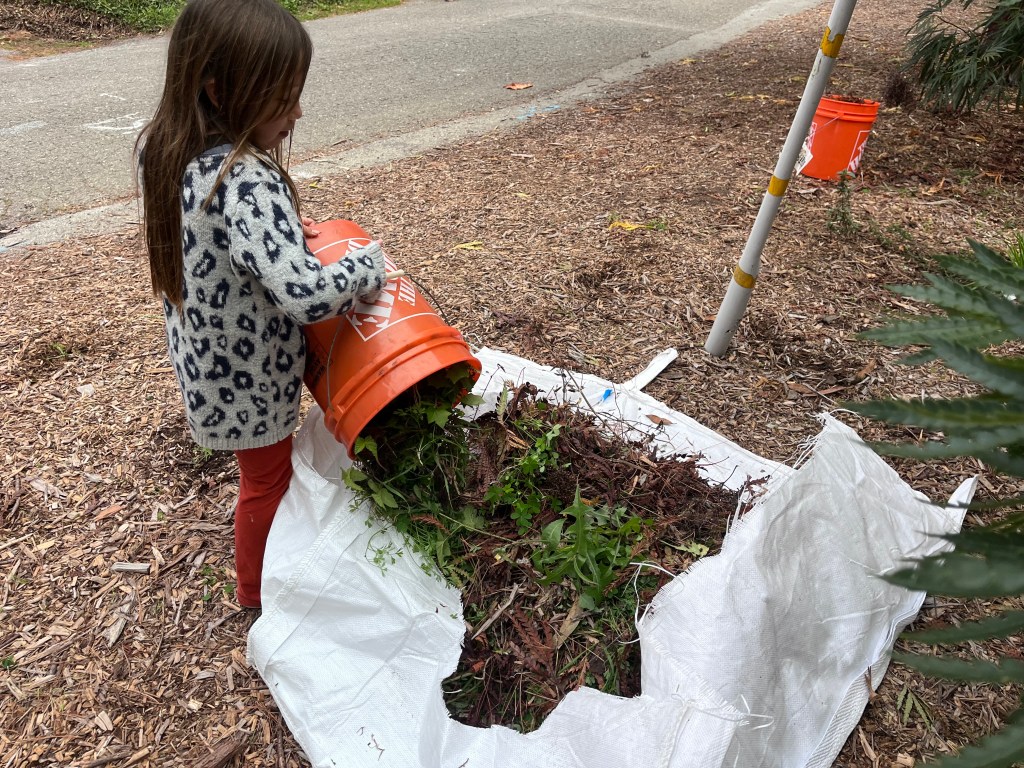

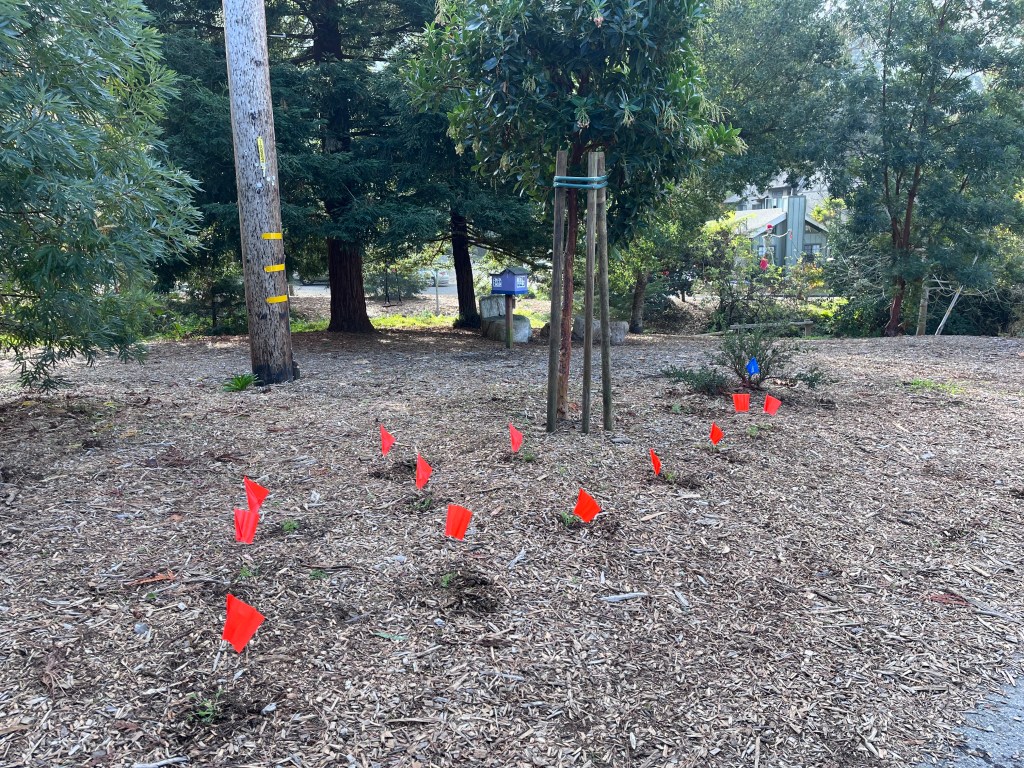
December 14th Calera Creek Park volunteer event
In this season of gratitude and giving, we are grateful for the many volunteers who joined us this year to help enhance the beauty, natural ecology and public enjoyment of Calera Creek Park.
We invite you to join us for one more habitat restoration event on Sunday, December 14th from 9-11am. Together, we will remove invasive non-native plants and care for native plants in the park. We hope you can join us!
For more details and to sign up, visit our page on the Pacific Beach Coalition site: https://www.pacificbeachcoalition.org/calera-creek-park-habitat-restoration-pacifica-quaterly/
Wishing all of our friends and neighbors a wonderful holiday season!
Native plant spotlight: Arroyo Willow
Contributed by Carlos Davidson
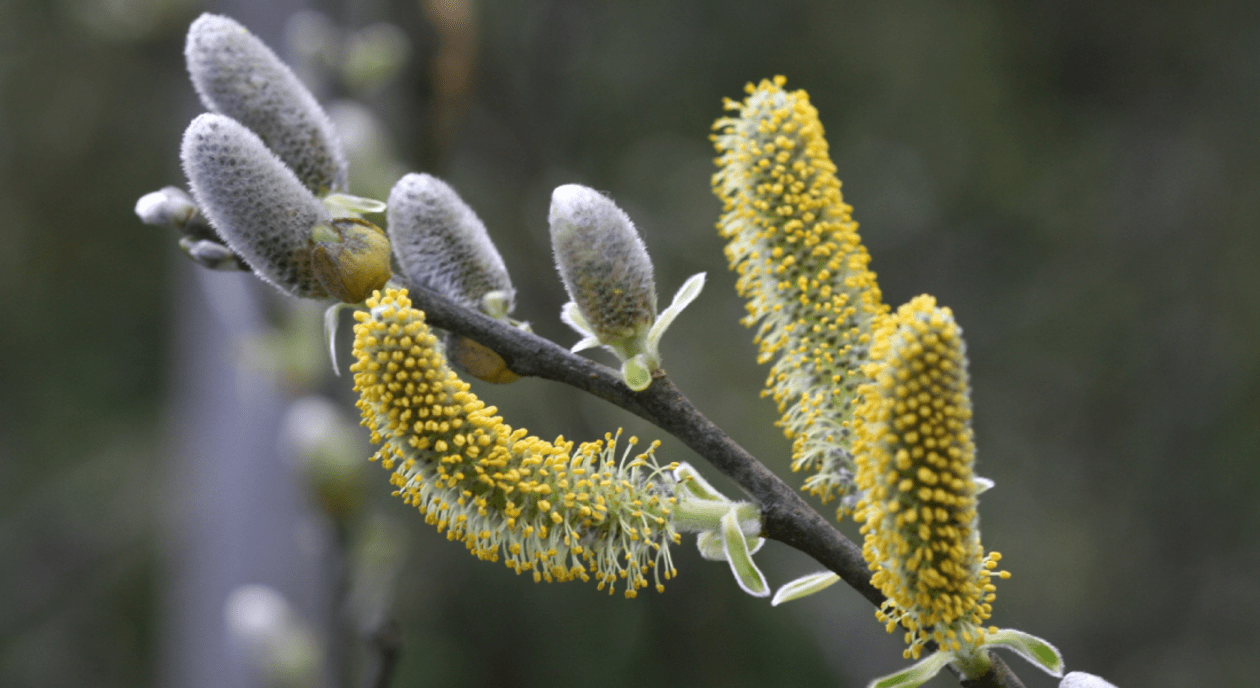
What is a native plant? Native plants are plants that naturally occur in an area, without human intervention. Native plants are important because they support local ecosystems by providing the specific food and shelter needed by local wildlife. One of the most common native plants in Calera Creek Park is the Arroyo Willow (Salix lasiolepis), which is a large shrub or small tree. Arroyo Willow is deciduous, dropping its leaves in the winter. The plant has beautiful yellow blooms that sometimes come out before the leaves. Arroyo Willows grow in riparian areas and other wetlands.
Arroyo Willows are the host plant for three butterflies: mourning cloak, Lorquin’s Admiral and western tiger swallowtails. Native Americans used Arroyo Willows for medicines, ropes, basketry and housing thatch.
In addition to Arroyo Willow, Shining Willow (Salix lucida) can also be found in Calera Creek Park. It looks very similar but has stipules – small paired appendages sticking out where a leaf stem attaches to a branch. Both willows play an important role in stabilizing the creek bank and controlling erosion.
Willows naturally “weep” – that is unlike a pine or eucalyptus tree, the outer branches of a willow often hang down all the way to the ground, giving the whole tree a dome like shape. If for some reason you need to prune a willow try to maintain its natural form.

Something went wrong. Please refresh the page and/or try again.
 Friends of Calera Creek Park